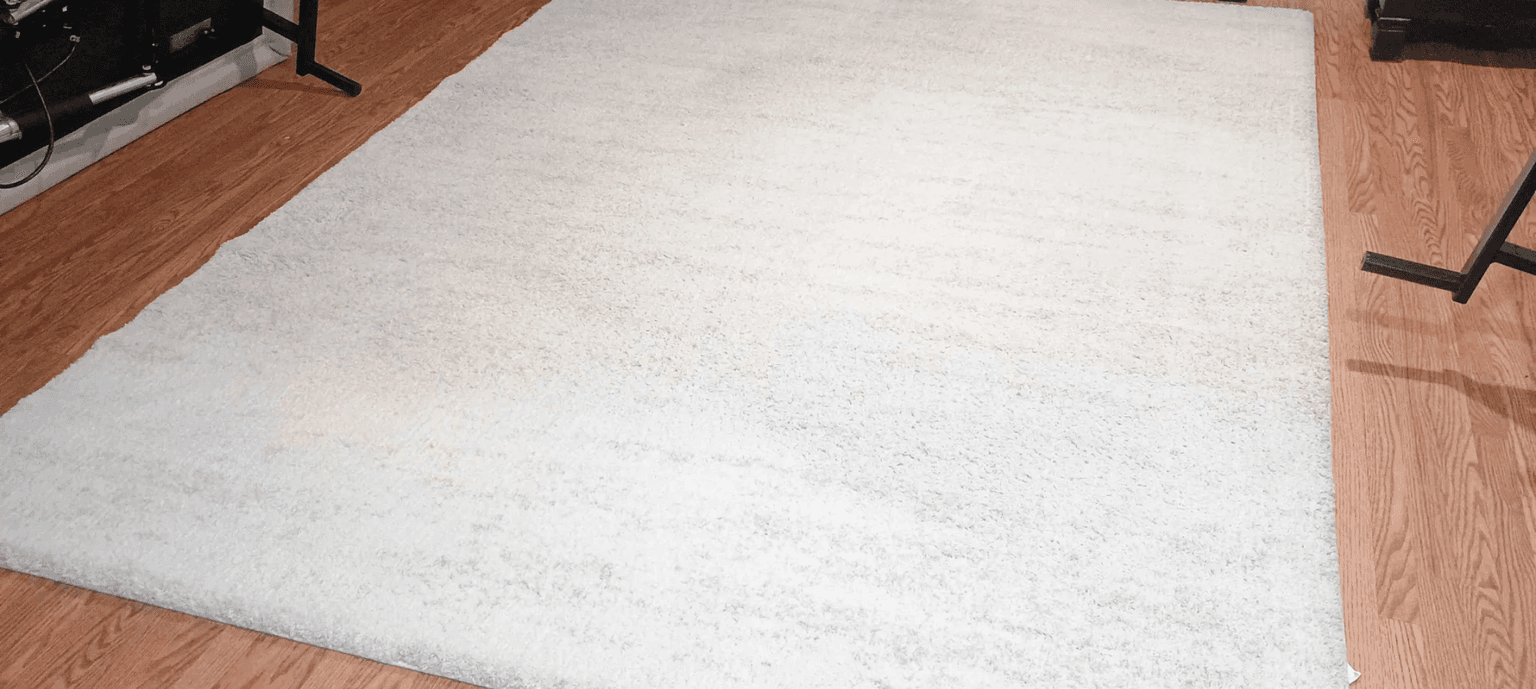
Picture the rug inside the back door of a house near Old Hickory Lake at the end of July. Wet feet off the dock, a dog that went swimming twice, sunscreen, a dropped popsicle, and a fine layer of sand from the swim beach. By Labor Day that rug has soaked up an entire summer.
Area rugs take more punishment per square foot than almost anything else in a home, and they sit in the rooms where people actually spend their time. We clean them right there on the floor. No pickup, no claim ticket, and no rolled-up rug riding around in a van for two weeks while your coffee table sits on bare boards. Most rugs are back under the furniture the same afternoon.
Every fiber, cleaned where it lies
We see the full range in Sumner County homes: wool, silk, cotton, jute, nylon, olefin, and the synthetic blends that make up most of what the big stores sell today. A plush shag in a nursery needs a different touch than a flatweave in the mudroom. A deep-dyed wool rug gets a gentler hand than a polypropylene runner built to survive a family of five.
Cleaning in the home lets the tech see the rug in its room, including what's under it and which corner the dog claims. If it sits on hardwood, we keep the water low enough that none of it reaches the boards. If it's layered over wall-to-wall carpet, we can often clean both on the same trip.
Jute and sisal are where water control really shows. They look great in a farmhouse-style living room, but soak them and they can brown, shrink, or ripple as they dry. A rug plant that washes everything the same way can hand one back two inches shorter with a tea-colored stain across the middle. We keep water to a bare minimum on those. One caveat, though: if a jute rug already browned from an old spill, we can usually lighten that mark, and we usually can't erase it.
Most big-box rugs are polypropylene or polyester. They're tough and they shrug off stains, yet they hang onto oily soil, and that's what makes a light gray rug look muddy after a couple of years. Those clean up nicely. Cotton and braided rugs fall somewhere in between.
For the rugs in most Gallatin houses, I think hauling them off to a plant is overkill. You live on a bare floor for a couple of weeks, your rug rides around with a dozen others, and you never see what was done to it. Here you can watch and ask questions while it happens, and plenty of our customers do.
How we clean an area rug, in five stages
- Inspection comes first. We look at fiber content, weave, backing, and fringe, then check the dyes in a hidden corner. That tells us how much agitation and moisture this particular rug can handle.
- Dry soil comes out next. A surprising amount of what lives in a rug is packed-down grit, pollen, and pet hair near the base. We get it out before anything damp touches the fibers, because water plus loose soil just makes mud.
- Spots get their own pre-treatment. Coffee, red wine, pet accidents, and ketchup each respond to something different, and the aim is to break the stain down without fading the color or fraying the yarn.
- Then the clean. The same fizzing, detergent-free solution we use on wall-to-wall works into the pile and floats the remaining soil up where we can lift it off. The rug is damp for a short while and never soaked. There's no perfume in it and nothing harsh, so the toddler who spends every morning on that rug can be back on it once it's dry.
- Grooming finishes the job. Shag gets fluffed and set, flatweaves get smoothed, and cut pile is brushed so the pattern reads sharp again. We can add a protector if you want spills to bead up a little longer next time.
A thin synthetic rug is usually dry within the hour. Dense wool pile takes longer. Run the ceiling fan.
Rugs are $25 off at the moment (it's on the coupons page), and they're covered by the same 100% satisfaction guarantee as everything else we do. If you don't like the result, you don't get a bill. Pick a time online, or send a question through the contact form first.
What a dirty rug costs you, and how often to clean it
Rugs are good at hiding dirt. A busy pattern can look fine for years while it holds pounds of grit, dander, and pollen in its base.
The first cost is wear. Grit grinds against the fibers every time someone crosses the rug, and over time it cuts them. That's how a rug gets thin down the walkway while the corners still look new. Getting the grit out on a regular schedule adds years to a rug you paid good money for.
The second is the air. Middle Tennessee spring pollen and pet dander settle into a rug the same way they settle into carpet, and a vacuum only reaches so far down. Allergy households notice the difference from even one professional clean a year.
Accidents that went deeper than the surface can get our treatment for urine in the backing during the same visit. Hand-knotted, antique, or Persian pieces get extra testing, and the oriental rug cleaning page walks through what that looks like.
A rug under a family room with kids and a dog does well on a 12-month cycle. A formal dining room rug that sees Thanksgiving and not much else can go a year and a half. The entry rug catching red clay and limestone mud every rainy week may need it sooner, and that's usually obvious once you lift a corner and look at the backing.
Between visits, vacuum both directions once a week and give the rug a half turn every spring so sun and traffic hit it evenly. Blot spills with a white towel the minute they happen. Leave the carpet shampoo under the sink alone, since most of those dry into a sticky film that pulls in dirt.
Then there's the pad. The pad under a rug on hardwood does real work: it stops slipping, cushions the fibers, and keeps sifted grit off the finish. Cheap rubber-backed pads break down and can stain wood over time, especially in a warm room. While the rug is up, we'll look at the pad and the floor under it. If the rubber has started to crumble or has left a yellow grid on the boards, we'll tell you to replace it before the rug goes back down.