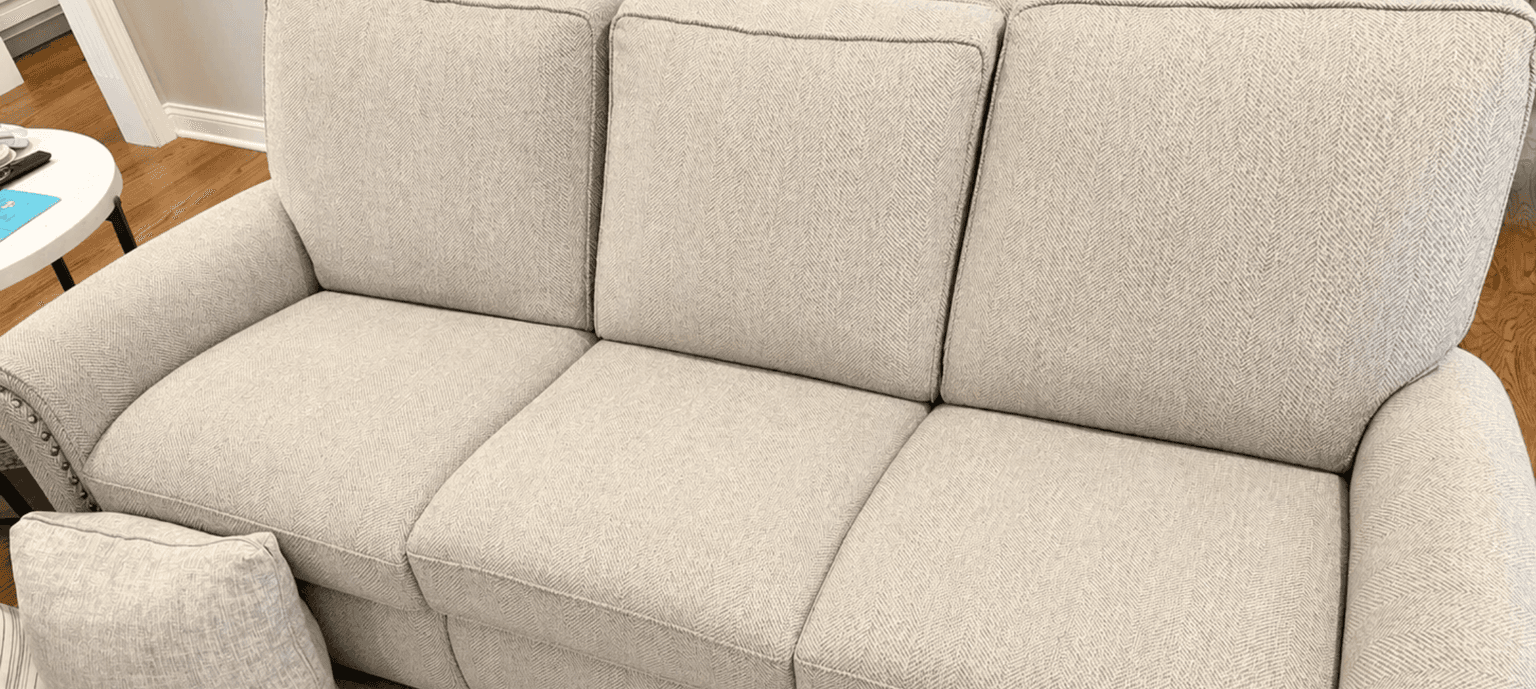
Check the arms of your couch against the back cushions. If the arms are a shade darker, that's skin oil holding onto dirt, and you stopped noticing it a year or two ago.
For most families the couch has been vacuumed plenty and cleaned never. It has earned a real cleaning. It's where the kids crash after a Saturday of games at Triple Creek Park, where the dog naps when nobody's looking, where the Vol State student in the family pulls all-nighters with a bag of chips. We clean furniture without flooding the cushions or leaving soap in the weave, and most pieces are ready to sit on by dinner.
What we clean
Pretty much anything with fabric on it:
- Sofas, couches, and sectionals
- Recliners and love seats
- Accent chairs and ottomans
- Upholstered dining chairs
- Mattresses
- Office chairs and home office furniture
- Patio cushions from the deck or the boat dock
Microfiber, cotton blends, linen, wool, and many delicate fabrics are all within reach. We check the manufacturer's cleaning code on every piece, and if something is truly dry-clean-only in a way we can't safely handle, you'll hear that from us up front.
Mattresses deserve a mention because hardly anyone cleans them. They collect sweat, skin cells, and dust mites for years. Pairing a mattress cleaning with the antibacterial sanitizer is popular in homes with allergy sufferers or a kid who just got over a virus.
What those letters on the tag mean
Most furniture carries a cleaning code under a cushion or on the deck. "W" means water-based cleaning is fine. "S" means solvent only. "W/S" or "WS" means either works, and "X" means vacuum only. Lots of sofas sold in the last few years are labeled "S" out of caution by the manufacturer, and after a test spot we can often still clean them. An "X" tag we take seriously, and we'll talk through options with you.
What happens to the couch
No two fabrics behave the same. A performance microfiber on a family sectional can take far more than a linen slipcover or a vintage chair with hand-dyed fabric. So the technician identifies the material, reads the tag, and tests a hidden spot before anything else. That test decides the products and how much moisture goes in.
Then the dry soil. Crumbs, dust, and pet hair come out of the seat decks and crevices first, since anything left behind would turn muddy once the cleaner goes on. Hair woven into a textured fabric gets extra passes here.
Coffee on the arm. Grape juice on the seat. A pet accident on the chaise. Each one gets its own pre-treatment, picked to break the stain down without leaving residue that pulls in dirt later.
The clean itself uses very little water. The fabric gets cleaned while the foam inside the cushion stays dry, so you don't get shrinkage, water rings, or the sour smell a wet sofa develops in August. We brush the nap at the end so it dries even and soft. Fabric protector is optional. With toddlers or a dog in the house, it tends to pay for itself.
Why the couch gets grimy faster than the floor
The couch is the one piece of furniture every person in the house touches daily, usually with bare arms and legs. Skin oil, sweat, and lotion soak in, and oil holds dirt. That's the dingy shading on arms and headrests that won't vacuum out.
Allergens are the other half. Dust mites live happily in upholstered furniture, pollen rides in on clothes when half of Sumner County is sneezing, and pet dander settles deep between cushions. A professional clean pulls a big share of that out, and allergy sufferers usually feel it.
Odor is usually what finally prompts the call: the dog's spot on the loveseat, a glass of milk that got into the seam, a smoker in the previous owner's family. We neutralize odors in the fabric, and urine that soaked into a cushion gets the pet enzyme treatment added on.
A good sofa is one of the bigger purchases in a house. A cleaning about once a year for the family couch, less often for the formal chair nobody sits in, keeps ground-in grit from breaking the fibers down and pushes back the day you go furniture shopping.
Pet hair and patio cushions
Dog and cat hair clings to microfiber like velcro. Between visits, a slightly damp rubber glove dragged across the cushions pulls up a surprising amount. Outdoor cushions from the porch or the boat collect pollen, mildew spots, sunscreen, and lake water over a Sumner County summer. Line them up on the patio and we'll clean them with the living room furniture.
What we'd skip, and what cleaning can't do
A fair picture of a typical job: a light oatmeal sectional, three years old, two kids and a beagle. The seat cushions come up a couple of shades, the arms come most of the way back, and the spot where somebody set down an uncapped permanent marker stays. We'd rather tell you that at the start. Ink and dye transfer from new jeans are the two things that most often don't budge.
Skip the rental upholstery attachment from the hardware store. Those machines put down more water than most fabrics can handle and leave detergent behind. We see a lot of water rings and stiff, crunchy cushions that started as a weekend project.
Cleaning also can't bring back faded dye. A sofa parked under a west-facing window will fade on one side over a couple of summers, and that color is gone for good. Blinds or moving the sofa a few feet protects the next one.
For upkeep, vacuum the cushions and crevices every week or two with the upholstery attachment, and flip loose cushions so they wear evenly. If the dog has a favorite spot, a washable throw over it saves the fabric a lot of grief. Blot spills with a clean white cloth. Don't rub.
Upholstery is $25 off right now on the coupons page. Ring 615-380-7554 at any hour, or pick a time online. If a piece doesn't come out the way you hoped, the Safe-Dry 100% satisfaction guarantee means there's no charge for it. Our carpet cleaning crew can do the floor under the sofa in the same visit, and questions can go through the contact page.