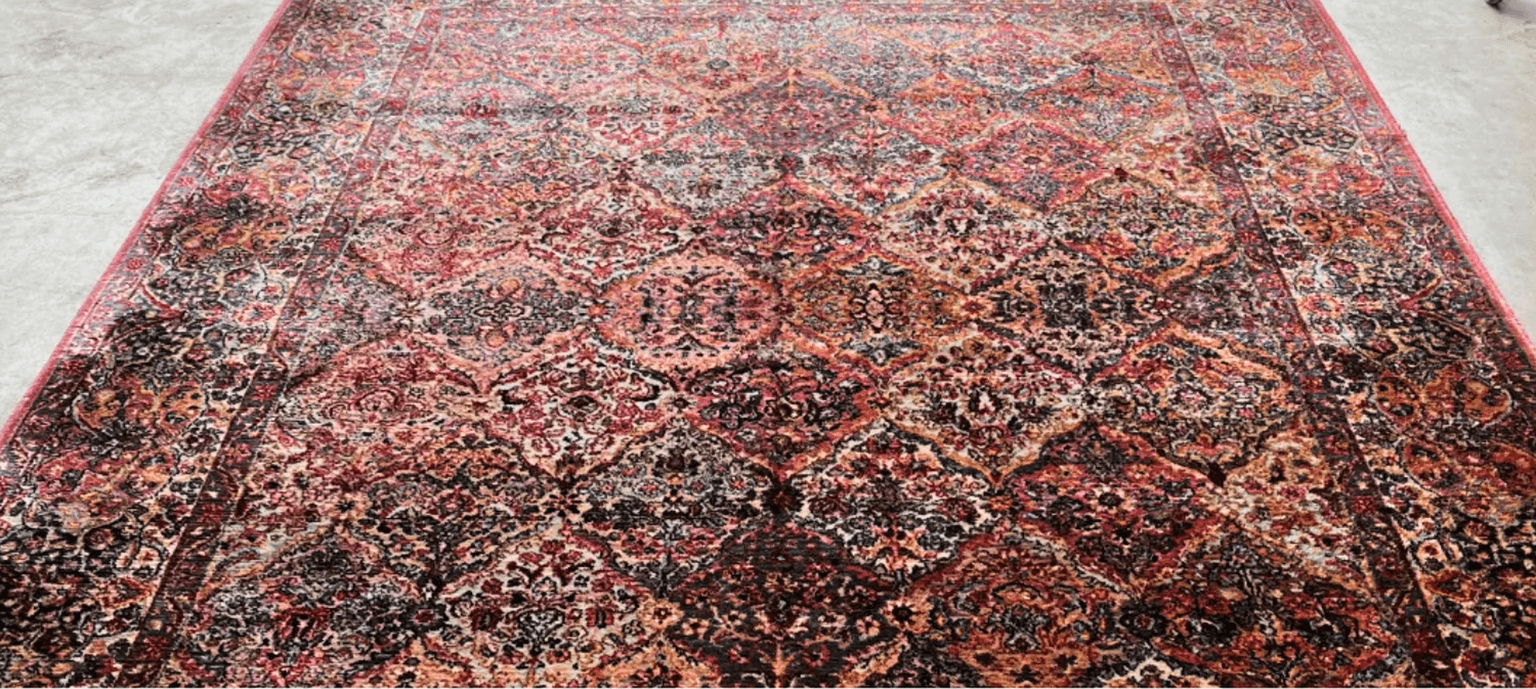
The call usually starts with an apology. "It was my grandmother's rug, and I'm a little scared to let anybody touch it." Hand-knotted wool, deep reds and navy, a medallion in the center, lying in the front room of an older house a few blocks off the downtown square. It has survived a few moves and a couple of dogs.
That fear is reasonable. Oriental and Persian rugs are built differently from the machine-made rugs in most houses, and the wrong cleaning can wreck one in an afternoon. Colors bleed, cotton foundations shrink, fringe yellows. We take these slowly, and we do it in your home. Your rug never gets loaded into a truck.
What makes an oriental rug different
Most oriental rugs are woven from wool and sometimes silk, on a cotton or wool foundation. Many are colored with vegetable dyes that don't behave like the synthetic dyes in a store-bought rug. Some hold fast. Others run the moment they get too wet or meet the wrong pH.
Construction matters as much as fiber. A hand-knotted rug has thousands of individual knots tied around warp threads, and the back shows the pattern almost as clearly as the front. A hand-tufted rug looks similar from above but has a glued backing that can let go if it's soaked. We figure out which one you have before anything else happens.
Grit is the quiet enemy. Sand and dried mud work down into the base of the pile and act like sandpaper every time someone walks across a busy foyer. Over a decade, that wears the knots down.
How the cleaning goes
The technician reads the rug first: fiber, weave, knot density, and the condition of the fringe and edges. Then every color gets a damp white cloth pressed against it in an out-of-the-way spot. If a dye transfers, the whole plan changes around it. If the rug needs something we can't do in a living room, you'll hear that before we start.
Dry soil comes out next, and on a wool rug there's a lot of it. Skip that step and the grit turns to mud inside the pile, which is hard on wool.
Red wine from a holiday dinner, coffee, a pet accident. We treat spots with pH-balanced products that go after the stain without stripping or shifting the dyes. Old stains that already changed the color of the fiber get an honest assessment first.
Then the clean itself, with very little water. It loosens soil and neutralizes odor while the foundation stays close to dry, and that's what keeps colors from bleeding and cotton from shrinking. My opinion, for what it's worth: steam has no business on a hand-knotted rug. It floods natural fibers and invites exactly the damage you're worried about. Most rugs we clean are ready for foot traffic within a few hours.
Last, we brush the pile in its natural direction. The pattern comes back into focus, and the wool feels the way a good rug should underfoot.
Why it's worth the care
Plenty of oriental rugs in Sumner County are family heirlooms. Others were a serious purchase. Either way, it's usually one of the most expensive things in the room, and a cleaning every year or so, sooner with pets or a busy entry, keeps the knots and fibers intact far longer.
Over the years a rug also collects allergens, bacteria, and sometimes mold spores, especially in a house that sat damp for a while. Middle Tennessee humidity doesn't help. A thorough clean takes those out and leaves the room smelling like a room again.
Cats are the other big one. A cat that picked the rug as its favorite spot, or a puppy still learning the rules, can leave odor deep in the wool. Heavy urine problems can get our cat and dog urine treatment on the same visit, adjusted for natural fibers and vegetable dyes.
Silk, antiques, and when we'll send you elsewhere
Silk gets its own conversation. It takes dye beautifully and shows every bit of it, and it's also far more sensitive to water and friction than wool. We can clean many silk rugs in the home, testing more spots and using a lighter touch. A true antique with brittle fibers or dry rot in the foundation is a different case.
We don't do rug repair. If your rug has moth damage, unraveling edges, holes, or fringe that's coming apart, the tech will point it out before starting. Sometimes cleaning first is still the right call. Other times a repair specialist should see the rug before anyone cleans it, and we'll say so and send you there.
Moths love a wool rug kept rolled in a closet or a humid basement. If you've got one in storage, unroll it and check both sides at least twice a year. Bare patches in the pile, or little silky tunnels near the edges, mean it's time to act.
Between cleanings
- Vacuum with the beater bar off or raised, and never run it over the fringe.
- Turn the rug 180 degrees once a year so sun from a south window fades it evenly.
- Blot spills with cool water and a white cloth. Skip colored towels and anything with bleach.
- Keep pets from chewing the fringe. It's the end of the warp threads, part of the rug's structure, and hard to repair.
- Put a good pad under it so it doesn't creep across a hardwood floor.
A rug in a room that stays damp, like a finished basement or a closed-up guest room in August, is more likely to go musty. Run the AC or a dehumidifier in there.
Machine-made rugs get a simpler routine, covered on the page for everyday area rugs. Every rug we clean, heirloom or not, is covered by the 100% satisfaction guarantee, and oriental rugs qualify for the $25 rug coupon on our coupons page. Book a time online whenever you're ready.
Not sure about a particular rug? Flip up a corner, take one photo of the back and one of the front, and send both through our contact page. The knots on the back tell us most of what we need to know before we ever come out.