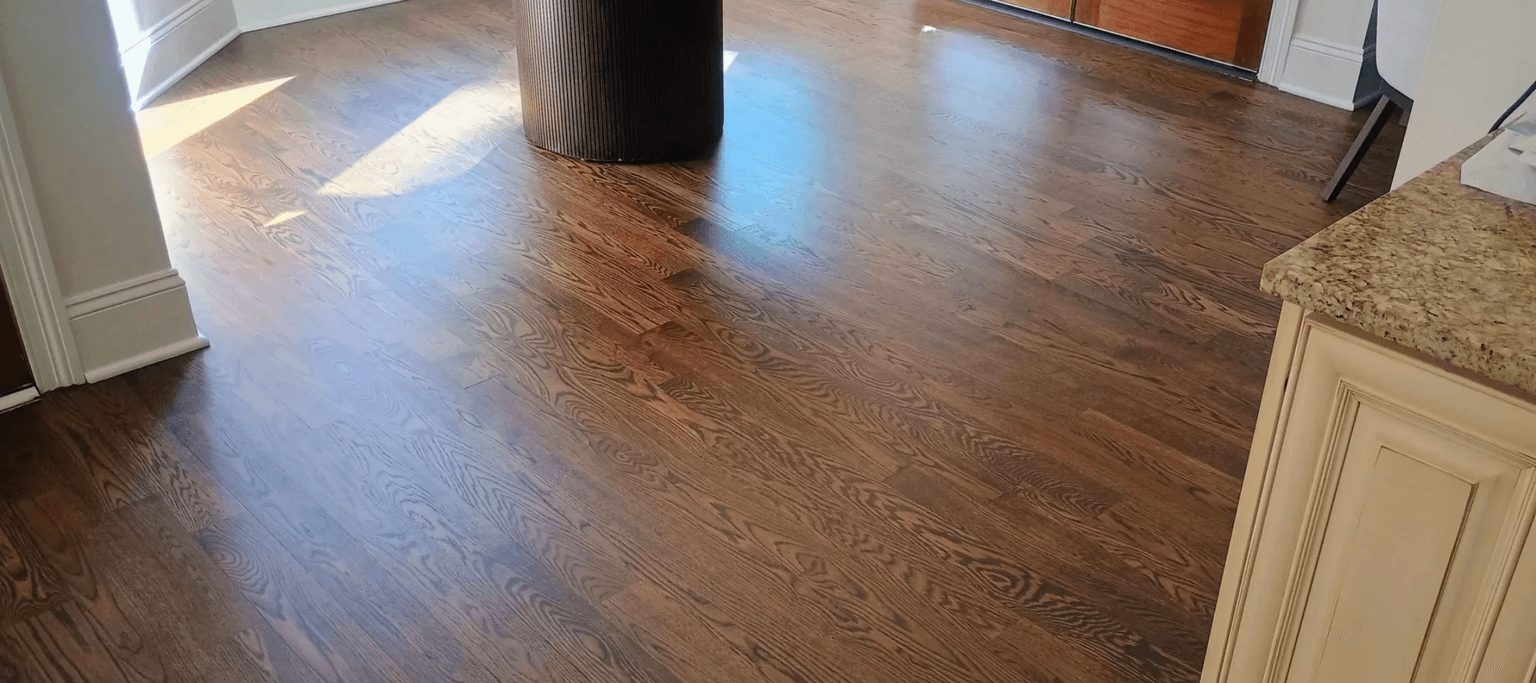
Dull hardwood usually isn't worn out. Most of the cloudy, streaky wood floors we see are wearing a film: old cleaner, cooking oil, fine grit, and whatever came in on the dog's feet, all layered on top of a finish that's still in decent shape underneath.
That's good news, because a film can be cleaned off. We lift that buildup with a pH-neutral cleaner and very little water, then give the floor a light buff. Nothing gets sanded, and nobody moves out of the house for a week. The floor is typically dry in an hour or two.
Which floors we clean
The process is safe on finished solid hardwood, engineered wood, and prefinished plank. Oak, maple, hickory, cherry, and the wide-plank engineered floors going into so many new builds around Sumner County all respond well. We clean:
- Kitchens and breakfast areas
- Living and dining rooms
- Stairs and landings
- Hallways and entries
- Home offices
- Commercial lobbies and retail floors
Engineered floors deserve special mention because so many newer Gallatin homes have them. The top layer is real hardwood, but it's often thin, sometimes only a couple of millimeters. That means it can't be sanded and refinished many times, if at all. Keeping it clean and free of grit is the main way to make it last, and a light hand with water is exactly what that thin wear layer and the joints between planks need.
What we don't do is refinish. If your floor has bare wood showing, deep gouges, or a finish that's worn through in the traffic lanes, cleaning won't fix that, and we'll tell you so during the inspection. For everything short of that, a professional clean often gets you most of the look you were hoping a refinish would.
Stairs get their own attention. Treads take a beating from every trip up and down, and the front edge of each step usually dulls first. We clean each tread by hand where the machine can't reach, so the staircase matches the rest of the floor.
Why wood floors need a different approach
Water and wood don't get along. Wet-mopping and steam push moisture into seams and board edges. Give it a few years and the wood swells and cups, or turns gray at the joints. Add Middle Tennessee humidity, which already makes boards expand every summer, and a soaked floor is in real trouble.
My advice is to throw out anything that promises shine. Oil soaps and "shine" products leave a residue that builds up with each use, and after a year or two the floor looks hazy, feels slightly tacky, and attracts more dirt than it did before. Plenty of lake-house floors out in Foxland and Fairvue look tired for exactly this reason, with a summer's worth of sandy feet ground into layers of polish.
Grit does the scratching. Sand and bits of gravel sit on the surface and get dragged around by every shoe and chair leg, and the middle of the room goes dull first.
What we do on the floor
A certified technician looks over the floor with you first. We identify the wood and the finish, mark the dull areas and scratches, and look hard for any spot worn to bare wood. That's where honest expectations get set.
Dust and grit come off before any cleaner touches the boards. Scrubbing sand into a finish is the opposite of what you're paying for.
Then the cleaning solution goes down. It's made for hardwood, and it breaks down dirt, oils, and leftover product without harming the finish or the wood beneath it. Our equipment works it gently along the grain, lifting buildup out of the small texture in the boards, and the moisture stays so low that nothing seeps into the seams. A final buff brings the luster back and lets the grain show through. It looks like clean wood, with no plastic shine and nothing slick underfoot.
The payoff is mostly time. Keeping grit and residue off the finish pushes back the day you need a real refinish, which is a much bigger and messier project. Dust, pollen, and pet dander come out of the seams between boards, where a dust mop can't reach, and allergy households usually notice. Light surface scratches often become much less visible after cleaning and buffing. Deep gouges don't, and we won't pretend otherwise.
Between professional cleanings
Daily care is simple, and it matters more than any product. Dust-mop or vacuum with a hard-floor setting a few times a week, since grit is the main thing that dulls a finish. Put felt pads under chair and table legs. Use doormats inside and outside every entry to catch sand and clay before they reach the boards.
When the floor needs a wet clean, use a barely damp microfiber mop and a cleaner labeled for finished wood floors. Skip steam mops and vinegar, and leave the oil soap on the store shelf. Those put water where it doesn't belong or build up the haze we come out to remove.
Humidity is worth watching. Wood swells in our sticky summers and shrinks when the heat runs all winter, which is why you may see small gaps between boards in January. Keeping the indoor level somewhere around 35 to 55 percent keeps that movement small. For most homes, a professional clean every 12 to 18 months keeps the floor looking its best, sooner in a busy kitchen or a house with big dogs.
For more on caring for wood between visits, which products to toss, and how cleaning compares with refinishing, Hardwood Restore is our dedicated resource on the subject and goes into far more detail than we can here.
Guaranteed results and easy scheduling
Hardwood cleaning comes with the same promise as the rest of our work: a floor you're happy with, or no charge. We're locally owned and BBB accredited, with a 5.0 on Google.
It's $50 off right now, and the coupon is waiting on our coupons page. If your wood meets tile or a rug elsewhere in the house, the tile and grout work and an in-home rug clean can happen during that visit too. The phone, 615-380-7554, is answered around the clock. You can also use the booking page, or send a photo of the floor through the contact page.