A lot of the carpet damage we get called about in Gallatin didn't come from the spill. It came from the cleanup.
Somebody knocks over a cup of coffee, grabs the nearest towel and a bottle of whatever is under the sink, and goes to work. Ten minutes later the spot is bigger and the fibers are fuzzy. A week after that, a dark ring shows up around it. We've seen it in brand-new builds off Nashville Pike and in 30-year-old homes near the square. The intentions are always good. The technique is usually the problem.
Five mistakes come up over and over.
1. Treating every stain the same way
Stains aren't built alike, so one method won't work on all of them. Coffee and red sports drinks are dye-heavy and set fast in light carpet. Grease and lotion are oil-based, and water mostly smears them around. Then there are the protein stains: pet urine, milk, blood, vomit.
Proteins are the ones people wreck most often, because the instinct is to hit them with hot water. Heat makes proteins bond tighter to the fiber, so a stain that would have lifted with cool water can become permanent.
Before you touch a spill, take five seconds to ask what it is. Cool water and blotting for proteins, a small amount of grease-cutting spotter for oils, fast action for dyes. If you can't tell, go gentle and call us before you go aggressive.
2. Scrubbing and soaking
Panic cleaning is a real thing. The spill happens, and suddenly there's scrubbing, pouring, and three different sprays going at once.
Scrubbing feels productive because you can see something happening. What's actually happening is friction pushing the stain deeper and outward while it frays the tips of the fibers. That's how a spot the size of a quarter becomes a light, fuzzy patch the size of a dinner plate. In traffic lanes, where the fibers already take a beating, repeated scrubbing speeds up visible wear.
Blotting wins almost every time. Use a white towel or microfiber cloth so no dye transfers, start at the outside edge, press, lift, and move to a dry section of the towel. Keep going until nothing more comes up.
Over-wetting is the other half of this mistake. Carpet acts like a sponge, and once water gets past the fibers into the pad, it can sit there for days, longer in a Middle Tennessee July. The musty smell starts there, and so do the stains that mysteriously "come back" a week later. Rental machines are a frequent culprit, since many of them lay down more water than they can suck back up.
3. Grabbing the wrong products
Store shelves are full of carpet sprays that promise miracles. Some bleach or weaken fibers. Many are heavy on soap and fragrance.
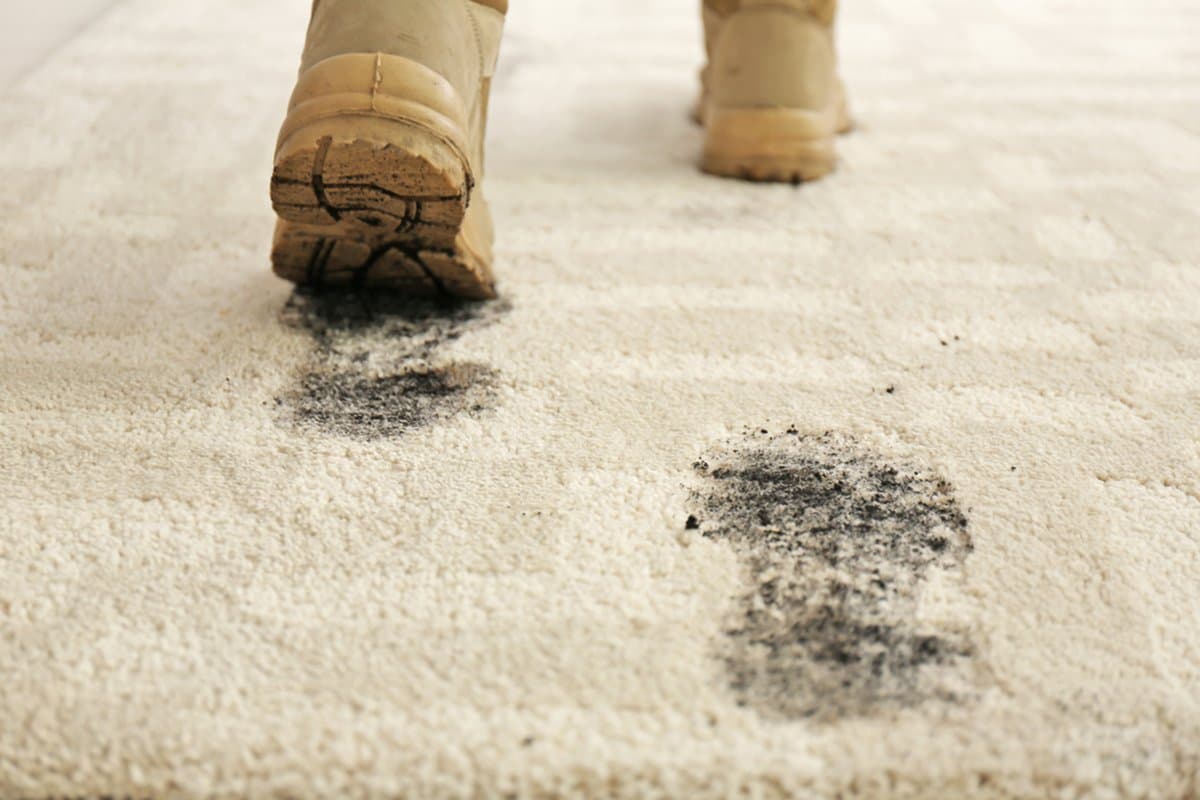
Two problems follow. A strong scent tricks you into thinking the carpet is clean while the source of the smell is still down in the pad. And soapy products leave a sticky film after they dry that grabs dirt from every sock and shoe crossing it. If you've ever cleaned a spot and watched it turn dark again within a couple of weeks, residue is the likely reason.
A few habits help:
- Test any product in a closet corner first and let it dry before judging.
- Use less than the label suggests.
- Never mix products on the same spot.
- Skip anything that relies on perfume to prove it worked.
We dropped soap from our own process for exactly this reason. With nothing left in the fiber for dirt to cling to, carpets we clean stay clean noticeably longer.
4. Letting maintenance slide
Grit works like sandpaper. Every step grinds fine soil against the fibers, and it happens long before the carpet looks dirty. Entryways, hallways, and the back-door-to-kitchen path take the worst of it, especially in homes with dogs coming in off red clay yards.
Vacuuming is the cheapest carpet protection there is, but speed matters. Slow passes pull up far more than a quick run across the room. In a busy house, the high-traffic areas may need it several times a week. Put a mat at each door, add a shoes-off habit if your family will go along with it, and you'll cut the grit coming in by a lot.
5. Waiting too long to call a professional
Most people call us when the carpet looks bad. By then, buildup has usually been collecting for a year or more. Traffic lanes that look permanently gray are often just packed with soil a vacuum can't reach. A pet odor that started as one accident has had time to spread into the pad and sometimes the subfloor, and at that point some of it may not come out at all. We'll tell you that up front.
For most Sumner County households, professional carpet cleaning every 6 to 12 months keeps things in good shape. Homes with pets or small kids do better toward the shorter end. If odor is already the issue, a pet odor treatment goes after the source below the surface.
On a visit, we point out the trouble spots with you standing there, pre-treat the lanes and stains, and then clean with a fizzing solution that uses so little water the pad stays dry. You can usually walk on it within the hour.
If you only change one thing, make it blotting. Put a white towel under the kitchen sink tonight so it's the first thing anybody grabs. For the spot that keeps coming back no matter what, 615-380-7554 gets you a technician who'll find out what's under it.