Your guests will smell your couch before you do. You sit on it every night, so your nose quit registering it months ago, and somebody walking in from the driveway picks up the staleness in the first ten seconds.
We hear a version of this on a lot of upholstery calls in Gallatin. The sofa looks fine. Nobody spilled anything big. And yet the family room smells faintly like a gym bag on humid days. Usually the couch has just never been cleaned below the surface, and it's been soaking up the house for years.
Compare it to your floors. The carpet gets vacuumed weekly and professionally cleaned now and then. The couch gets a pass with the crevice tool when company's coming. Your skin is on that fabric for hours a day. The floor mostly meets shoes.
Where the smell actually lives
Upholstery fabric is full of tiny gaps between fibers. Every time someone sits down, a bit more skin oil, dust, and hair gets pressed into them. A vacuum lifts the loose layer on top. The rest works down toward the foam.
A couch is also a dust trap. Air in a house keeps moving, the dust in it has to land somewhere, and a big soft sofa catches its share the same way carpet does. Dirty carpet makes it worse, because every trip across the room kicks fine particles up and they drift onto the cushions. Then add what the family brings: hair oil on the headrests, crumbs from Friday pizza in front of the TV, dander from the dog's corner, the soil that rubs off work pants. It builds so slowly you only notice when you flip a cushion and see the arm is two shades darker than the back.
Middle Tennessee weather speeds it along. Damp summer air reacts with old residue from spills and pet accidents, so a couch that smelled fine in January can turn musty by July. Spring pollen in Sumner County is its own problem. Leave the windows open on a heavy yellow day and a film settles on everything, cushions included.
The fixes that backfire
Most of the furniture damage we see started as a well-meant cleanup, and fabric freshener is the most common culprit. It adds scent and takes nothing away. When the source is body oil or a years-old juice spill, the perfume fades in a day or two and the original smell comes back with a floral note on top. Some sprays also leave a residue that stiffens the fabric and gives dust something to grip.
Too much water does the real harm. It soaks past the fabric into the foam, takes days to dry, and leaves brown rings or a mustiness worse than what you started with.
Scrubbing a spot hard frays the fibers and spreads the mark outward. Harsh cleaners from under the sink can bleach delicate fabric. And a big stain attacked with a household spray and a rag usually ends up bigger, and permanent.
Figure out why it smells before you reach for anything. Surface dust? Vacuum it. A washable cover? Wash it the way the tag says. If the odor keeps coming back after both, the problem is below the surface and needs a real clean.
Pets and the couch
Dogs and cats bring outdoor dirt, dander, and skin oils onto every cushion they claim. Accidents are the bigger issue. Urine that reaches the foam can seem fine for weeks, then flare up on the first muggy day. Blot any accident fast with a white towel and skip the scented cover-ups. For repeat spots you need something that goes after the residue itself, which is what our pet odor service is for. I'll be straight with you, though. A cushion that's been soaked over and over for years sometimes needs a new foam insert, and we'll say so if that's what we find.
What we do on a sofa
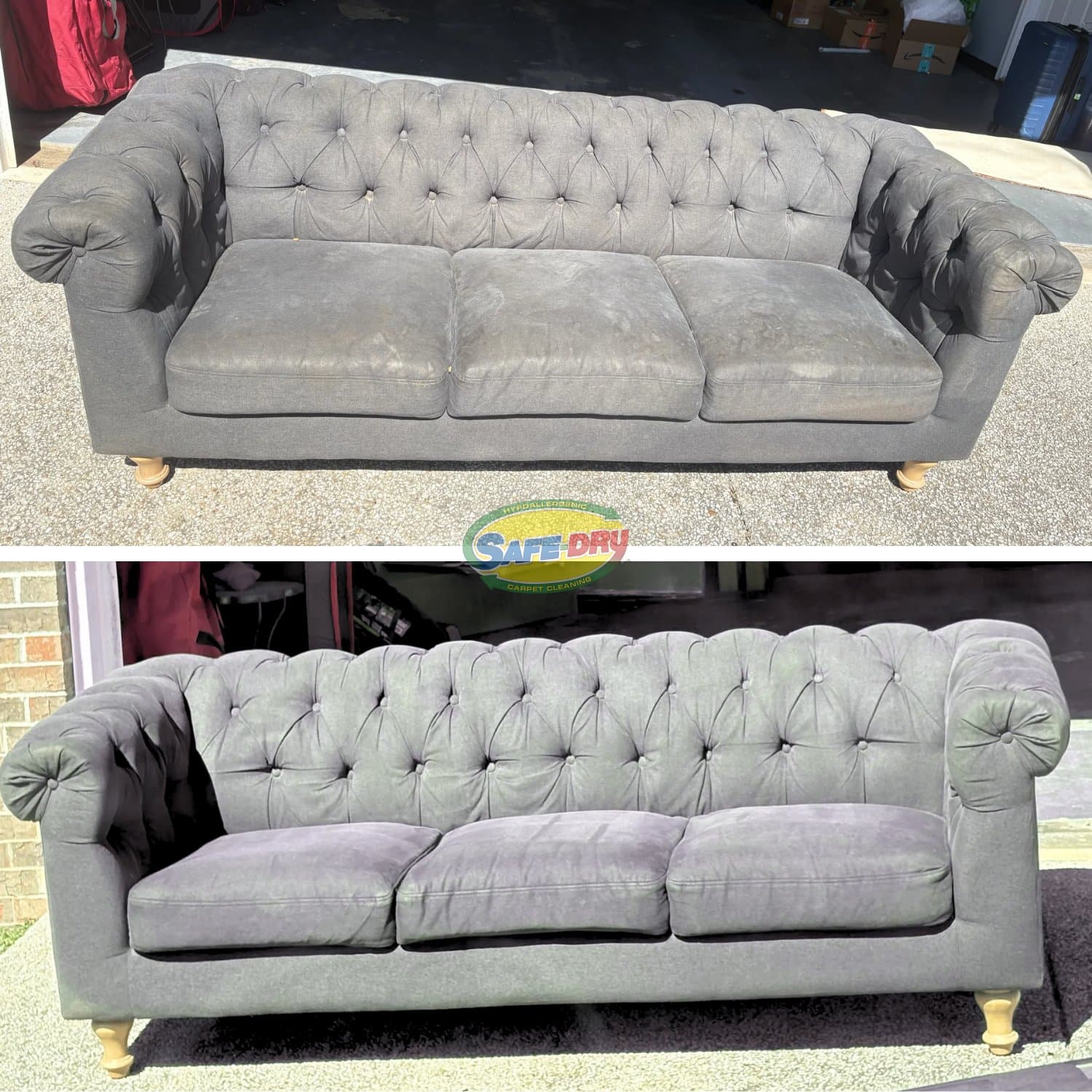
When buildup is past what a vacuum can reach, upholstery cleaning resets the whole piece. The technician identifies the fabric first and reads the care code on the tag, since a cotton slipcover and a velvet accent chair get handled very differently. A thorough vacuum pulls out the grit before anything damp touches it. The arms and headrests, where the oil collects, get a pre-treatment.
The clean itself uses a carbonated solution with no soap in it and very little water. The cushions never get soaked, and most couches are ready to sit on before you've finished lunch. Nothing is left behind to attract the next round of dirt, and that's the part that keeps a couch fresh longer. Leftover shampoo and spray residue is the main reason furniture goes dingy again so fast after a DIY job.
If the rug in the same room smells stale too, have us do it on the same visit. A fresh couch sitting on a musty rug won't feel fresh for long, and we clean area rugs right there on your floor.
How often, and what to do in between
A family-room couch with two kids and a Lab needs a professional clean about once a year, sometimes twice. A formal sofa nobody sits on can go years on vacuuming alone. Skip the calendar and watch for the signs: odor that's back a day after you vacuum, darker arms, dull seats, a spot that won't budge.
Between visits, spread the work out:
- Once or twice a week, vacuum seats, arms, and seams with the upholstery tool. Pet homes need more.
- After a spill, blot without rubbing, and check the tag before any product touches the fabric.
- Every few weeks, pull the cushions, vacuum underneath, rotate or flip them if the design allows, and wash the throw blankets.
- Every few months, compare the most-used seat against a cushion nobody sits on.
Two small habits help more than people expect. Leave a few inches between the couch and the wall so air moves behind it, and run a fan on muggy days so moisture doesn't sit in the cushions. And put a washable throw on the dog's corner. It's cheaper than any cleaning we sell. When the arms have gone dark anyway, the number is 615-380-7554, and the coupons page has $25 off upholstery.