Flip a cushion over before you touch the stain. Somewhere on the deck or along the frame underneath, most couches have a care tag with a one or two letter code, and that code decides everything else you do.
The stain itself is usually the easy part. Juice boxes tip during cartoons. The dog comes in with red clay on all four paws and heads for the middle cushion. What actually ruins fabric in Gallatin living rooms is the cleanup: too much water, the wrong product, a lot of hard scrubbing. Some fabrics shrink when they get wet. Some bleed dye. Some dry with a tan ring around the spot you were trying to fix.
What the code on the tag means
- W means water-based cleaners are generally fine.
- S means solvent only. Water can leave rings or marks.
- WS means either type may work.
- X means vacuum only. No water, no solvent.
No tag at all? Treat the couch as an S and test everything in a hidden spot first. Two sofas that look alike can react in completely different ways, because microfiber, linen, velvet, and performance fabrics all carry their own dyes and finishes.
The basic routine for a fresh spill
Speed helps, but calm helps more. Work through it in this order:
- Lift off anything solid with a spoon or a dull knife. Don't press it down.
- Blot the liquid with a white towel. Colored towels can transfer dye onto light fabric.
- Vacuum up any dry crumbs or grit, since dry soil acts like sandpaper once it gets wet.
- Test your cleaner on the back or underside of the couch and let it dry completely.
- Put a small amount of cleaner on a cloth, never straight on the cushion, and blot from the outer edge toward the center.
- If the code allows water, rinse with a cloth that's barely damp, then blot dry.
- Run a fan or open a window so the area dries evenly.
- Look at it again once it's fully dry. A spot that looked gone while wet sometimes comes back as the fabric dries.
Resist the urge to scrub. Rubbing pushes the spill deeper and can leave a fuzzy worn patch that's more noticeable than the stain ever was. Keep heat away too. A hair dryer can set protein stains like milk or blood for good.
Different stains, different problems
Coffee, tea, and soda
Color and sugar, and sometimes dairy. Blot hard, use a little mild upholstery-safe cleaner if the code is W or WS, then rinse the residue out. Leftover soap and sugar both attract dirt, which is why a "cleaned" spot often looks dingy a week later. If creamer soaked into the cushion, a sour smell can follow, and that usually needs more than a surface wipe.
Grease and food
Pizza, butter, chips, and sauces leave oil that water won't budge. Blot with a dry towel first. On a fresh grease mark, a light dusting of white absorbent powder can pull oil up from the surface; let it sit a few minutes and vacuum it thoroughly. Then go by the code. S and X fabrics should never get a water-based cleaner.
Pet accidents
Urine and vomit leave residue that smells long after the spot looks clean, especially once it reaches the foam. Blot fresh urine until the towel comes up nearly dry. Skip steam and strong chemicals, and don't bother covering it with fragrance, because the smell returns when the perfume fades. Repeat accidents on the same couch call for our enzyme treatment for pet odor.
Ink, marker, and dye
These are the riskiest. Blot gently with a dry cloth and hold off on water, since some inks bleed the moment they get wet. The worst habit here is trying product after product. Layering cleaners can discolor the fabric, and mixing bleach with ammonia or acids gives off fumes that are genuinely dangerous.
Water rings
Plain water can stain upholstery, which surprises people. When moisture dries unevenly it leaves a tide line of dissolved soil. We see those rings most on S-coded fabrics that someone treated with water.
Things to keep off your couch
Bleach, vinegar poured straight on the fabric, colored cloths, stiff brushes, carpet shampoo, and anything that promises to work on "all surfaces." I'd also keep the handheld carpet machine in the closet unless the manufacturer says your fabric can handle it. They soak fabric far past what it can dry out, and the cushion underneath stays damp for days.
When the stain wins
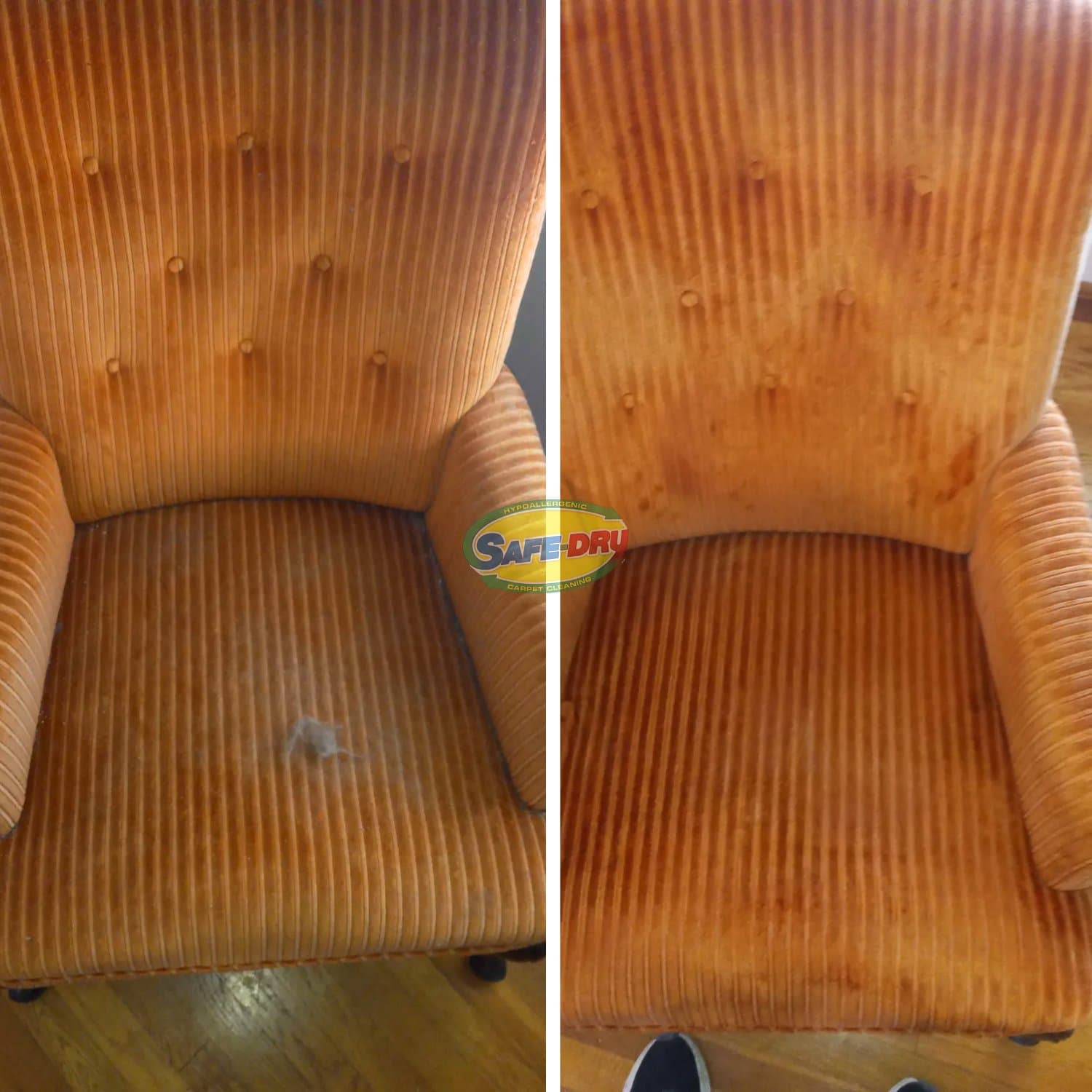
Old stains, stains that keep coming back, anything involving urine or dye, and any fabric coded S or X are good reasons to stop and call. Our upholstery cleaning starts with a look at the fabric and the stain, then uses a solution that fizzes soil loose with very little moisture. Cushions dry in a few hours, and there's no sticky film left to catch dirt. If the carpet under the couch took the same spills, we can do both in one visit.
A water ring on silk or an old ink mark on pale linen may not come all the way out. We'll still work on it, but go in expecting an improvement.
Got a spot that's already been scrubbed a few times? Leave it alone now. Every extra round sets it deeper. Pick a time online and put the tag code in the notes so the technician knows what fabric is waiting.