
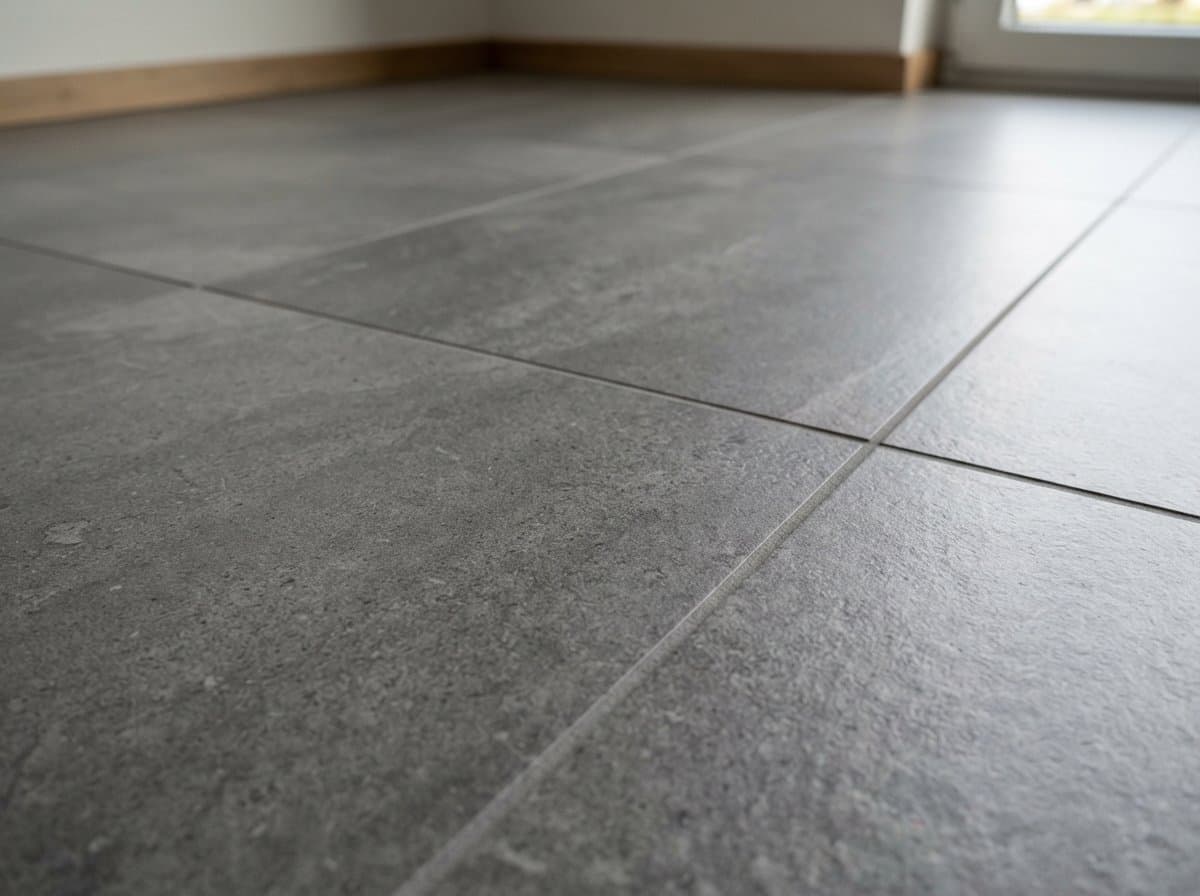
Stand at your kitchen sink and look down. Then look at the grout in the corner behind the trash can, where nobody walks. If those two look like they came from different floors, you already know where your house takes its beating, and you've found the first thing we'd check on a tile visit.
Two questions follow on nearly every tile call we take: what actually gets grout clean, and what's it going to run me? Both answers depend on what's on your floor and how hard the room gets used.
Why grout goes dark before the tile does
Tile is smooth and sits high. Grout is porous and sits a little low, in a channel between every tile. When you mop, the pad glides across the tile tops and the dirty water runs down into those channels. The tile dries looking clean. The grout keeps a little more soil every time.
Too much floor cleaner speeds it up. Product that never gets rinsed leaves a film, and film holds dirt. Honestly, a lot of the "dirty grout" we see is years of leftover cleaner soaked into the lines with soil stuck to it.
Bathrooms add soap scum and the moisture that feeds mildew in the corners. Entries add red clay. White grout goes tan, then gray, and the room looks ten years older than the tile really is.
The kitchen gets it worst
Family kitchens here see a bit of everything. Breakfast before the bus to Station Camp, kibble scattered by the pantry, cleats coming in through the garage after practice, a pan of bacon popping grease every Saturday. The tile shrugs it off. The grout doesn't.
Not every square foot works equally hard, so spend your effort where the mess lands:
- In front of the sink, where drips and prep splatter hit all day
- Around the stove, where airborne grease settles
- The path in from the garage or back door
- Under the breakfast table and the high chair
- Around the pet bowls, where water and kibble dust meet fur
The stove zone gets its own warning. Grease forms a thin tacky layer that grabs dust, and once it reaches the grout the lines turn brown fast. People answer that by buying the strongest degreaser on the shelf. Don't. Strong chemicals can dull some tile, and if nobody picks up what they loosen, you've only moved the grime a few inches.
A routine you'll actually keep
Sweep or vacuum before you mop, every single time. Wet grit turns to mud, and mud settles in the grout.
Wipe up juice and milk the minute they hit the floor. Sticky spots become dirt traps within hours.
Measure the floor cleaner. Label amount, or a little less.
Give the lines near the sink and stove a few minutes with a soft brush every week or two. Nobody needs to scrub the whole kitchen on their knees.
Rinse. One pass with plain water and a clean pad picks up loosened soil and leftover product, and it's the step almost everybody skips.
Let the floor dry before the kids and the dog run through, or the footprints go straight back into the lines. In bathrooms, run the fan during and after showers. Put a mat at every outside door.
Home remedies and rentals
Hand scrubbing with a stiff brush and mild detergent is fine for a half bath with light soil. On a whole kitchen floor it's hours on your knees, and the deep stains rarely budge.
Steam machines, rented or professional, use heat and a lot of water. They loosen grime, but that moisture has to go somewhere, and in grout it tends to sink in and stay.
Bleach and ammonia kill mildew. They can also discolor colored grout and damage stone. Never mix the two. The fumes are dangerous.
Baking soda paste and diluted vinegar are cheap and okay on ceramic in small doses. Vinegar and lemon juice are acids, though, so keep them off marble and travertine, which etch.
What we do differently
You'll know when mopping has quit working. The grout by the sink is a shade darker than the grout by the pantry. The floor looks dull an hour after you mop. Scrubbing brightens a line for a day before it slides back.
That's where our tile and grout cleaning comes in. We walk the floor first and note the trouble zones, like grease at the stove, a traffic path from the garage, or mildew in a shower corner. The worst lines get a pre-treatment to break the buildup down. Then the technician runs a machine buffer that scrubs evenly across the tile and down into the grout, working out soil a mop has been pushing around for years, and the loosened residue gets pulled off the floor so none of it stays behind. You get the same result by the fridge as by the back door, and the grout never gets flooded. Nothing we use gives off harsh fumes, which matters with a crawling baby or a dog who sleeps on cool tile all summer.
One limit: cleaning can't fix cracked or crumbling grout. If lines are missing chunks, that's a repair, and we'll point it out.
What it costs, roughly
We won't quote a floor sight unseen, but four things move the number. Square footage comes first. A half bath is quick, and an open kitchen that runs into a breakfast nook and mudroom takes longer. Then the tile itself: ceramic and porcelain are forgiving, while the natural stone in some of the lake houses around Rogana and Foxland needs pH-neutral products and a gentler hand. The grout's condition matters, since light soil comes clean fast and a decade of neglect takes more pre-treatment and more passes. And some homes add an antibacterial treatment in the bathrooms.
On a small, lightly soiled floor, DIY is fine, and we'll tell you so. On a big kitchen, a rental machine, a few bottles of product, and a lost Saturday add up fast, and soaked grout or etched stone costs more than we do.
How often depends on the grout, not the calendar. A couple who mostly eats out might go years. Four kids, two dogs, and dinner cooked at home every night probably means once a year. A new puppy or a holiday season full of company speeds that up.
The current tile offer is $45 off on the coupons page. When you book online, mention the kind of tile (ceramic, porcelain, stone) so the technician shows up with the right plan.