Before we set a single piece of equipment down, the customer had one question: would the cleaning leave a smell?
There was a real reason behind it. A pregnant employee worked in the space every day, and the customer wanted to be sure the carpet cleaning wouldn't fill the room with fumes or heavy fragrance. They wanted the carpet cleaner, and they wanted the people using the room to be comfortable during and after.
We were glad they asked. A concern like that belongs in the plan from the start, and it shaped how we handled the whole job.
Why a strong smell isn't proof of clean
A lot of people connect a strong scent with a clean floor. Citrus, flowers, "fresh linen." Fragrance only sits on top of whatever is already there, though. The fine soil packed between fibers stays put, and so does the film from old spills and the oil that builds up where shoes and chair wheels roll the same path all day.
In an occupied workplace, that perfume can also be the thing that bothers people most. Anyone with sensitivities notices. Anyone pregnant notices first.
So we explained what we'd actually be putting down. Our solution has no soap and no added perfume, and it's hypoallergenic. It also goes down with very little water, so the carpet wouldn't sit damp and musty for hours while people were trying to work.
That was enough for the customer to say go.
What the carpet needed, and how the visit went
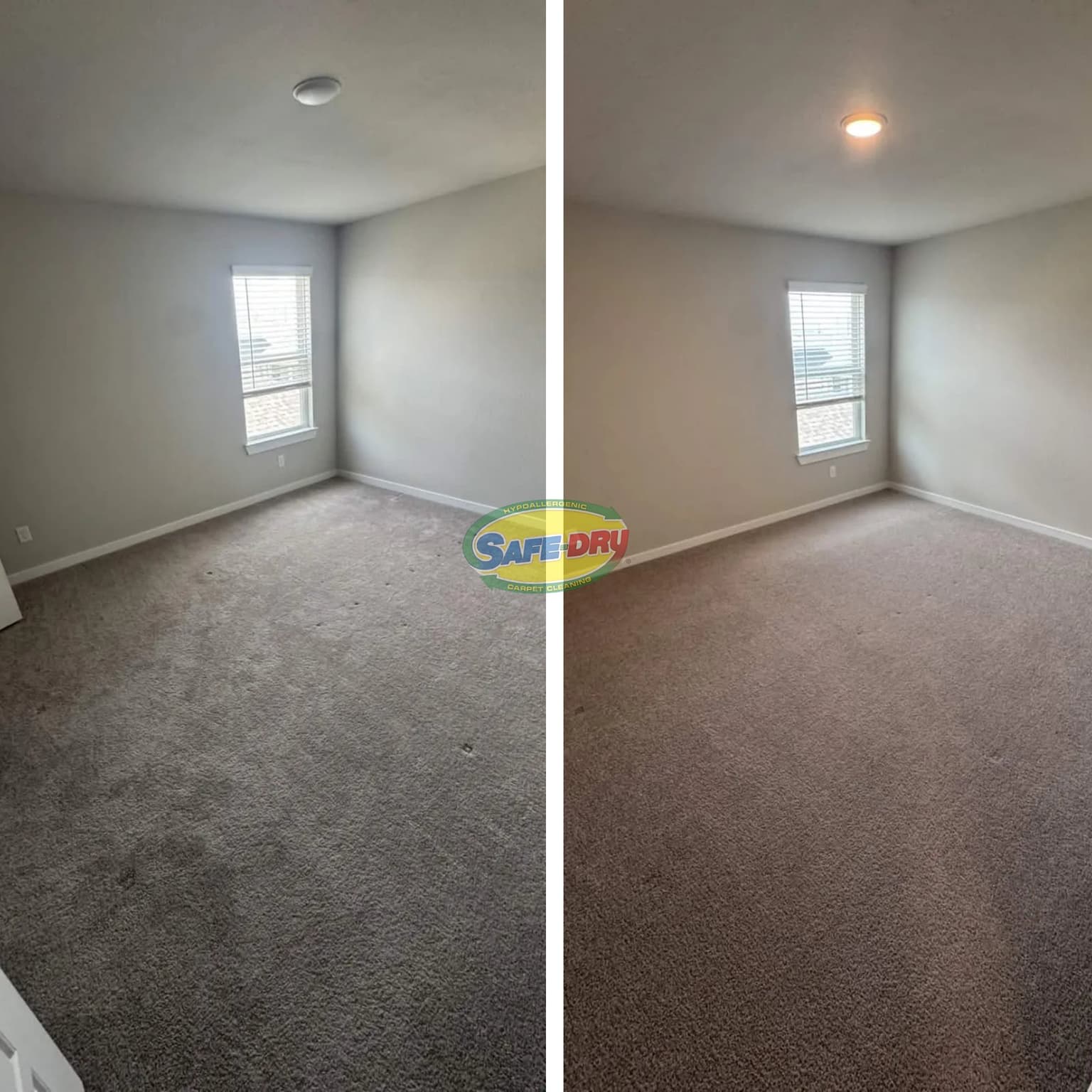
Like most commercial carpet, this one showed its use in predictable places. The entry had collected the most outdoor soil. The walkways between desks had gone darker and flatter than the rest. Around the chairs the wear was concentrated, and a few spots showed where spills had been cleaned up quickly but not completely.
People often assume a gray traffic lane means worn-out fibers. Usually it's buildup a vacuum can't reach. We're honest about the other case too: fiber damage, dye loss, and old chemical treatments can be permanent, and no cleaning reverses them. We'd sooner say that on day one than promise something we can't deliver.
- We walked the room with the customer and marked the entry, the traffic paths, and the spill spots.
- Those areas got a targeted pre-treatment so the soil would let go more easily.
- We cleaned the whole floor with the fizzing solution, keeping the water light, then pulled the loosened soil back out.
- Nothing soapy stayed in the fibers, which meant no film for new dirt and no lingering product smell.
The review we got afterward mentioned how quick the service was. Quick wasn't rushed. When the technician knows where to focus, the appointment moves along without skipping anything, and for a business that means less disruption. On most jobs like this the carpet is dry within the hour, a little longer on a muggy late-summer day in Sumner County with the pile on the thick side.
The customer walked back into a room where the traffic lanes had evened out and the entry looked like it belonged to the same carpet again. It felt soft underfoot, no stiff or tacky patches. And the room smelled like a room, which is exactly what they'd asked for.
That residue-free finish keeps paying off after we leave. With no soap in the fibers, new dirt doesn't cling as easily, so vacuuming and a good entrance mat do more of the work between visits.
- Vacuum the busiest paths slowly and often.
- Blot spills with a white cloth before they spread, and go easy on the water.
- Use store-bought spotters sparingly, and test them first.
- Keep a mat at every entrance to catch grit before it reaches the carpet.
- If a spot keeps coming back after you clean it, stop treating it and let us look.
A baby on the way, someone with allergies, a plain dislike of chemical smell: bring it up when you book. Our carpet cleaning process adapts to it well, and so does the antibacterial sanitizer if you want an extra step on high-touch areas. Send the details through the contact page or tell whoever answers 615-380-7554.